
A Vacation in the Schilcherland: the Wine Region Nobody Can Work Through
The Schilcherland is not a place but an area: some fifty kilometres of vineyard hills between Ligist and Eibiswald, named after a wine that barely exists anywhere else. Nobody comes here for a single sight.
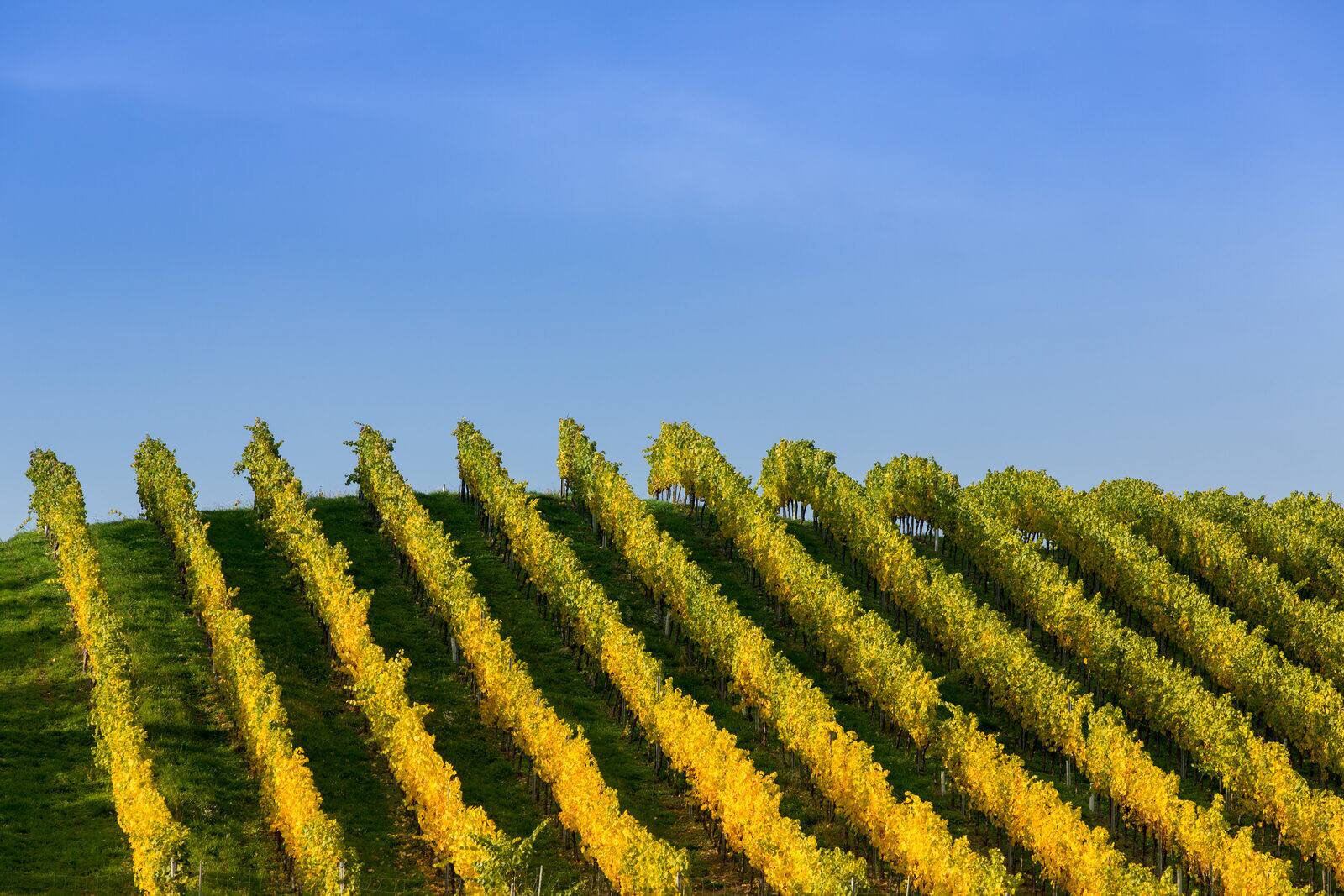
The Schilcherland is named after a wine, which is unusual enough to start with. Schilcher is a rosé made from the Blauer Wildbacher grape, an indigenous variety grown in any meaningful quantity almost nowhere outside West Styria. So there is a factual reason why this region does not taste like other wine areas: the wine everything revolves around effectively does not exist elsewhere.
A vacation in the Schilcherland is therefore not one you could have in a similar form somewhere else. What it is - and what it is not - is best described in four points.
What the Schilcherland is, geographically
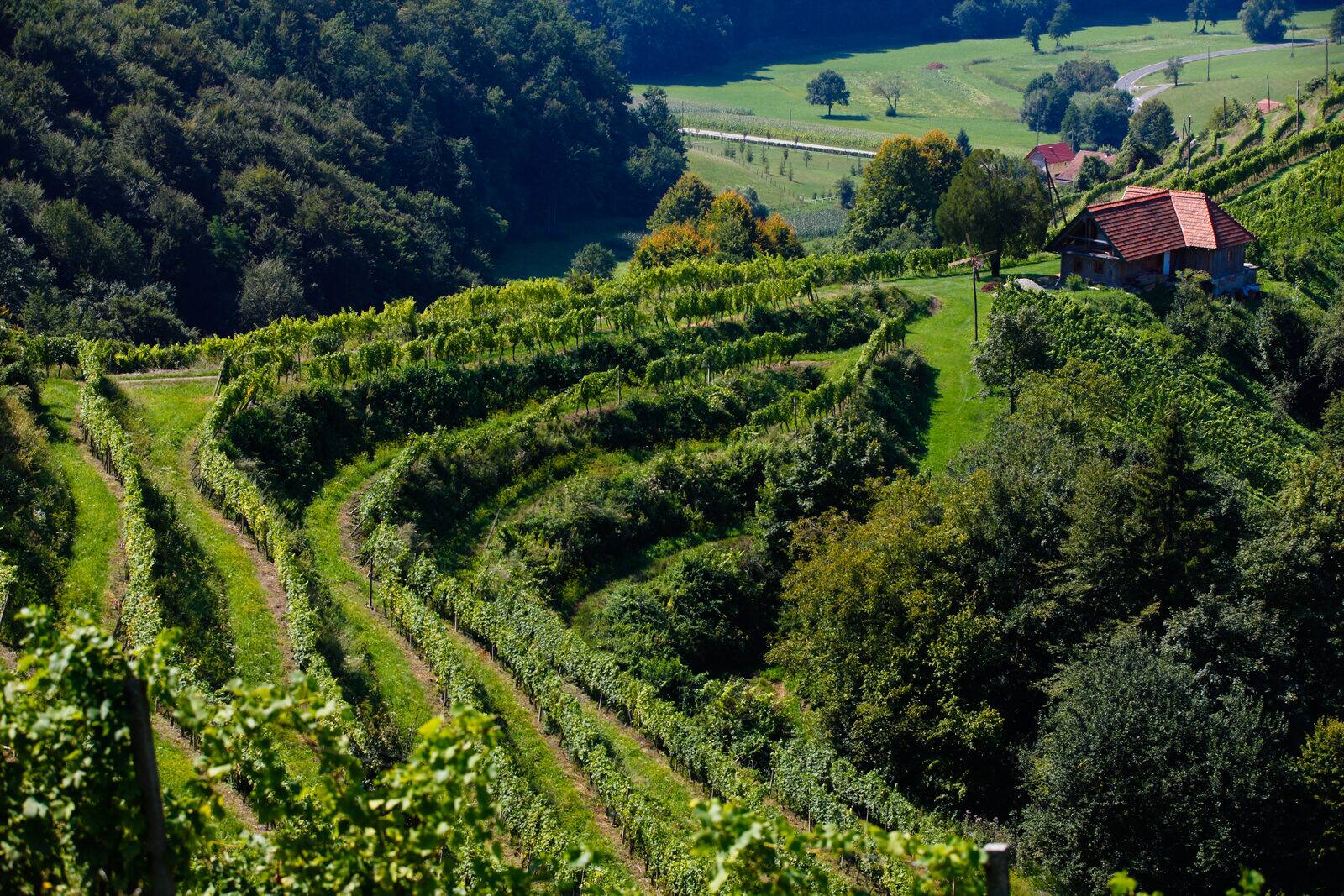
The Schilcherland stretches as a wine-growing area across several municipalities of West Styria, at its core from Ligist through Stainz and St. Stefan ob Stainz to the Deutschlandsberg area and on toward Eibiswald. It sits at the eastern foot of the Koralpe, which shapes the landscape: no plain, no mountains, but a dense succession of ridges carrying the vines, with wooded rises in between.
That structure is why you cannot drive through the Schilcherland in a day. The roads follow the valleys, not the straight line. Two wineries five kilometres apart on the map are often fifteen by road. Treat that as a drawback and you have picked the wrong region. Accept it as a rhythm and you have understood the core of it.
Stainz lies roughly in the middle and is therefore the most practical base for guests - from here most establishments in the region are within twenty minutes by car. More about the village itself is under Stainz.
Why the Schilcherland is less visited than South Styria
The South Styrian Wine Road is the better-known neighbouring region, with correspondingly more traffic at weekends. The Schilcherland has comparable landscape, comparable quality - and considerably fewer passing visitors. The reason is not one of quality but of history: South Styria was opened up for tourism earlier and more thoroughly.
The wine: what sets Schilcher apart from other rosé
Schilcher is made exclusively from Blauer Wildbacher. It is typically marked by pronounced acidity, a dry style, and aromas often described as wild strawberry and redcurrant. If you are coming from other rosés - softer, fruitier, often with residual sugar - it usually takes a glass or two to adjust.
Alongside it sits the Frizzante version, lightly sparkling and the more casual choice in summer, as well as white wines and Zweigelt that many estates also produce. What that means in detail is under Discovering Schilcher and Schilcher Frizzante.
The more interesting part of a Schilcherland holiday, though, is not the grape variety but the spread: the same wine tastes noticeably different from one estate to the next, depending on site, ageing, and the hand of the winemaking family. Visit one producer and you get an impression. Visit three or four over several days and you get a picture.
The Buschenschank: the part that cannot be explained
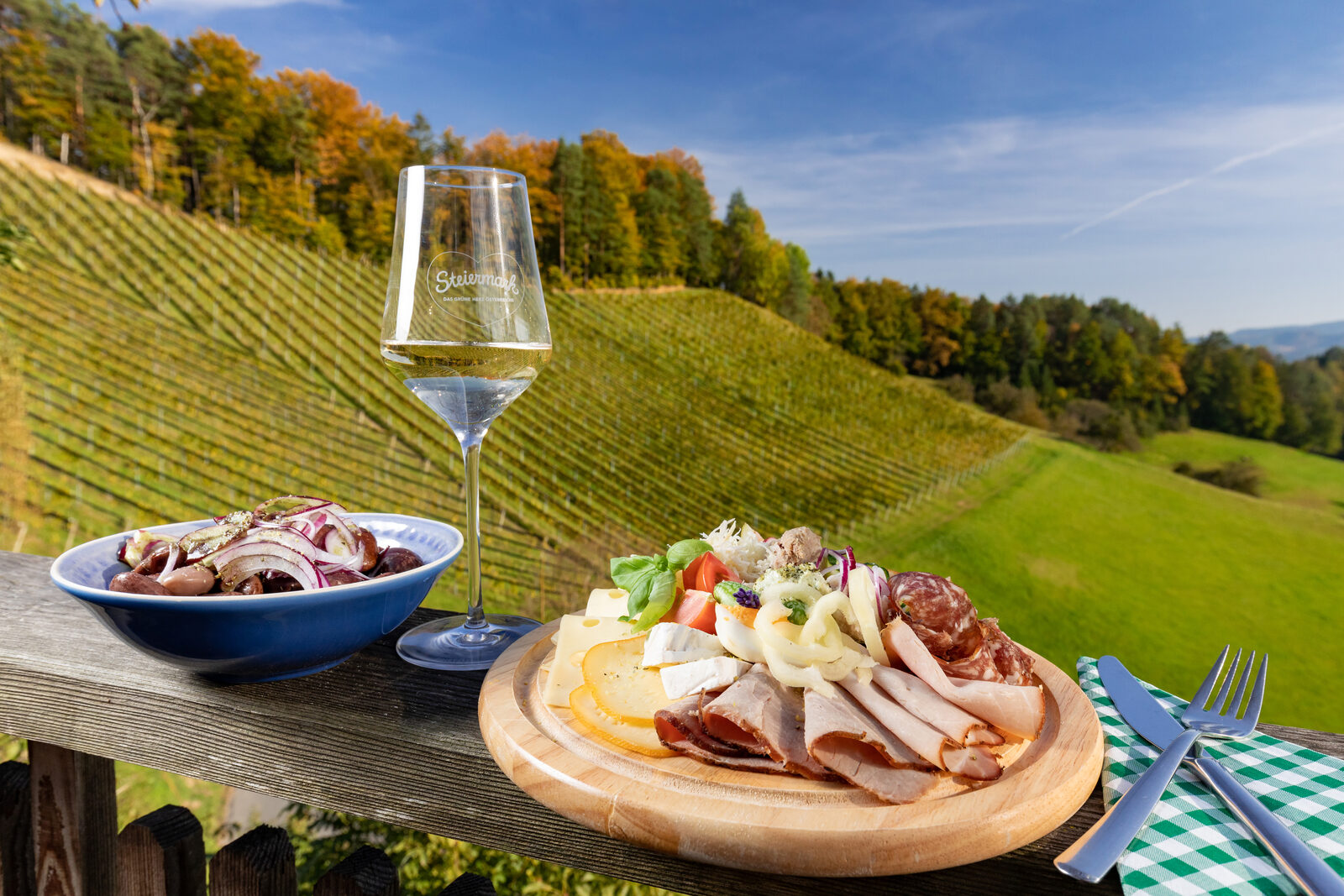
The Buschenschank is the West Styrian answer to the question of where to eat. It is not a restaurant: there is no hot kitchen in the conventional sense, no menu with starters and mains, and the wine must come from the estate itself. What is served is what the farm produces - cold platters, spreads, cured meats, cheese, and often pastries.
Two things are worth knowing. First: Buschenschenken do not open continuously but follow their own seasonal calendar. A call the day before is not a courtesy but a planning necessity. Second: you almost always stay longer than intended. A selection of five establishments around Stainz, with distances, is under Top 5 Buschenschenken near Stainz.
What a Schilcherland holiday costs
By Austrian standards the region is unremarkable on price - considerably cheaper than the lake regions in the west, roughly on a par with South Styria. The largest item is accommodation, the second the wine tavern visits. What is missing are the cost drivers of other holiday regions: no lift passes, no resort fee for facilities you do not use, no restaurant evenings with drink markups if you have a kitchen.
What else you do in the Schilcherland
A wine holiday consisting only of tastings becomes tiring after two days. The region has enough alternatives within a short distance:
Walking. Roughly 240 kilometres of marked trails run through the Schilcherland, from a flat valley loop to the summit cross on the Rosenkogel. Concrete routes with distances and walking times are under Hiking around Stainz.
Riding. The wine roads are good on a bike if you account for the elevation - details under Cycling the Wine Roads.
Looking. Stainz Castle, the Hundertwasser church in Bärnbach, the Lipizzaner stud farm at Piber, Deutschlandsberg Castle - all within 25 minutes by car. The full overview is under Places to Visit.
Nothing. The most underrated point. Most guests who stay a week do not spend their best hours at a scheduled item.
The right season
Spring (April to June): the quietest time. The vineyards turn green, the first wine taverns open after winter, and on a weekday you meet almost nobody on the trails.
Summer (July and August): long evenings, warm nights, busy swimming pools. The vineyard slopes are hot from midday - walk early.
Autumn (September and October): the densest season. Harvest, colour change, the best light - and the busiest time of the year. Book earlier. More under Grape Harvest in West Styria.
Winter (November to March): quiet. Many wine taverns are closed, but the landscape is yours alone. For guests looking for stillness, it is the region's most honest season.
Why an apartment fits better here than a hotel
The reason is practical: buy from several winemakers over three days and you have eight bottles. In a hotel room they stay in the suitcase. In an apartment with a fridge they become dinner.
The second reason is rhythm. Spend an evening at a wine tavern and you do not want to be in a breakfast room at eight the next morning. What changes with your own kitchen and no fixed times is described under Vacation Without a Hotel and under Vacation Apartment in West Styria.
At Johann & Anna in Stainz there are five apartments for exactly that, each with its own kitchen and its own character, in the middle of the Schilcherland.
A vacation in the Schilcherland suits guests who want to get to know a region rather than tick it off. If you want a base with short distances, Johann & Anna has five apartments in the middle of Stainz.
Where exactly is the Schilcherland?
In West Styria, at the eastern foot of the Koralpe, at its core between Ligist, Stainz, St. Stefan ob Stainz, Deutschlandsberg, and Eibiswald.
How long should you plan for a Schilcherland holiday?
Three to five days cover several wineries and wine taverns without pressure. A week additionally allows trips to Graz and the neighbouring regions.
What is the difference between the Schilcherland and the South Styrian Wine Road?
A different grape, a different style of wine - and considerably less traffic. South Styria is more developed for tourism.
Do you have to like wine to holiday here?
No, but it helps. Without wine there is still hiking, cycling, and the destinations nearby - only the wine is the reason the landscape looks the way it does.
When is the Schilcherland quietest?
Between late April and mid-June, and from early November. September is the busiest month.
Do you need a car?
For the wineries and destinations, effectively yes. Within Stainz and the immediate surroundings, a bike and your feet are enough.